

Underground Gas Storage (UGS) systems play a fundamental role in maintaining the stability, reliability, and efficiency of modern energy networks. By utilizing the natural containment properties of geological formations such as depleted reservoirs, aquifers, and salt caverns, these systems allow gases—most commonly natural gas (NG)—to be stored safely and withdrawn on demand. As the energy transition progresses, UGS provides critical flexibility, balancing seasonal fluctuations in gas demand, ensuring energy security, and facilitating the large-scale integration of renewable energy sources. This article explores the operational principles, key performance parameters, and the strategic importance of underground gas storage in the evolving energy landscape.
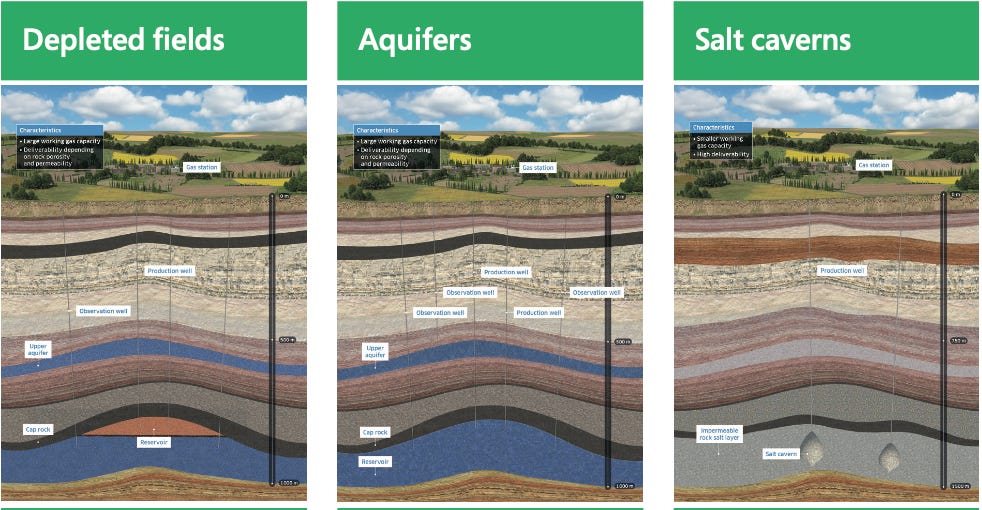
The concept of gas storage, specifically Underground Storage Systems (USS), is based on the natural capacity of geological formations to store gases. These systems involve injecting and storing gases, such as natural gas (NG), which can then be withdrawn for transport to end-users or industrial processes. Underground storage facilities are primarily used to manage variations in gas demand and supply.
Types of Geological Formations Used:
Main Reasons and Importance of Gas Storage
Underground gas storage is considered the first flexibility provider in Europe’s energy system. The sources highlight several crucial reasons for its implementation:
1. Meeting Load and Demand Fluctuations (Operational Flexibility)
• Seasonal Management: Facilities are typically operated on an annual cycle, injecting gas during the off-peak summer months and withdrawing it during the winter months of peak demand.
• Balancing Pipeline Flow: Storage is used by mainline transmission pipeline companies to maintain the operational integrity of the pipelines, ensuring pressures are kept within design parameters.
• Leveling Production: Producers use storage to store gas that is not immediately marketable, delivering it during high-demand months (e.g., winter).
• Offsetting Changes in Demand: Storage is increasingly important due to shifts in demand, such as the growing summer peak demand caused by electric generation using gas-fired power plants.
2. Enhancing Energy Security and Reliability (Insurance Value)
• Security of Supply: Storage ensures a safe, cost-effective, and efficient gas supply, especially in response to market demands and long-distance pipelines.
• Insurance Against Accidents: It acts as insurance against unforeseen factors, such as natural factors (like hurricanes) or malfunctions in production or distribution systems.
• Diversification: Storage facilities make the diversification of supply sources easier for energy players, enhancing energy security and contributing to a more independent system.
• Meeting Regulatory Obligations: Storage helps ensure the reliability of gas supply to consumers at the lowest cost, as monitored by regulatory bodies.
3. Economic and Market Value
• Reducing Price Volatility: Storage ensures commodity liquidity at market centers, which helps contain price volatility and uncertainty.
• Market Speculation/Arbitrage: Producers, marketers, and other third parties use storage as a speculative tool, buying and storing gas when prices are low and selling during peak demand when the price is elevated (taking advantage of arbitrage opportunities).
• Cost Management: By allowing better use of the cheapest energy sources, storage reduces consumers’ exposure to price volatility. It also helps avoid over-investment in other energy infrastructures needed to meet demand securely and efficiently.
• Maintaining Contractual Balance: Shippers use stored gas to maintain the contractual volume balance between what they deliver to and withdraw from the pipeline system, thus avoiding hefty penalties.
4. Integration of Renewable Energy and Climate Transition (New Values)
As Europe transitions to a climate-neutral future, gas storage systems, particularly those for hydrogen (UHS), will become essential.
• Coping with Renewables Surplus: Underground storage is a convenient way to cope with renewable energy surplus.
• Seasonal Storage for Renewables: Hydrogen storage emerges as a large-scale and seasonal storage alternative, which is essential to harness the maximum benefit from the high integration of variable renewable energy sources (VRES) in the grid.
• Facilitating Low-Carbon Economy: Underground storage technology is considered significant for rapid implementation due to policies aimed at moving towards a low-carbon economy.
• Environmental Benefits: Storage helps avoid electrical redispatch and fossil-based hydrogen production, and also helps avoid the curtailment of renewable energy sources (RES).
How does underground gas storage work?
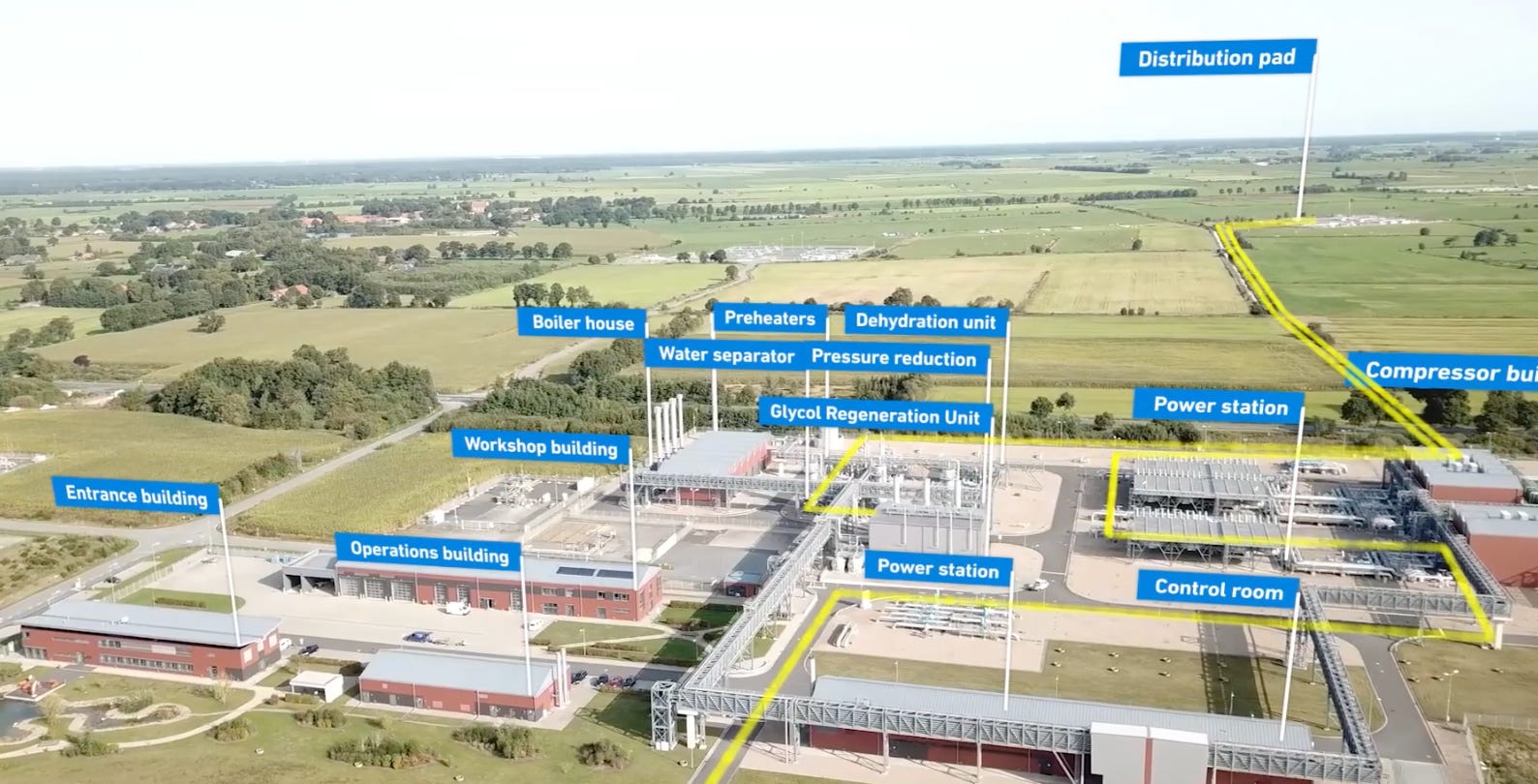
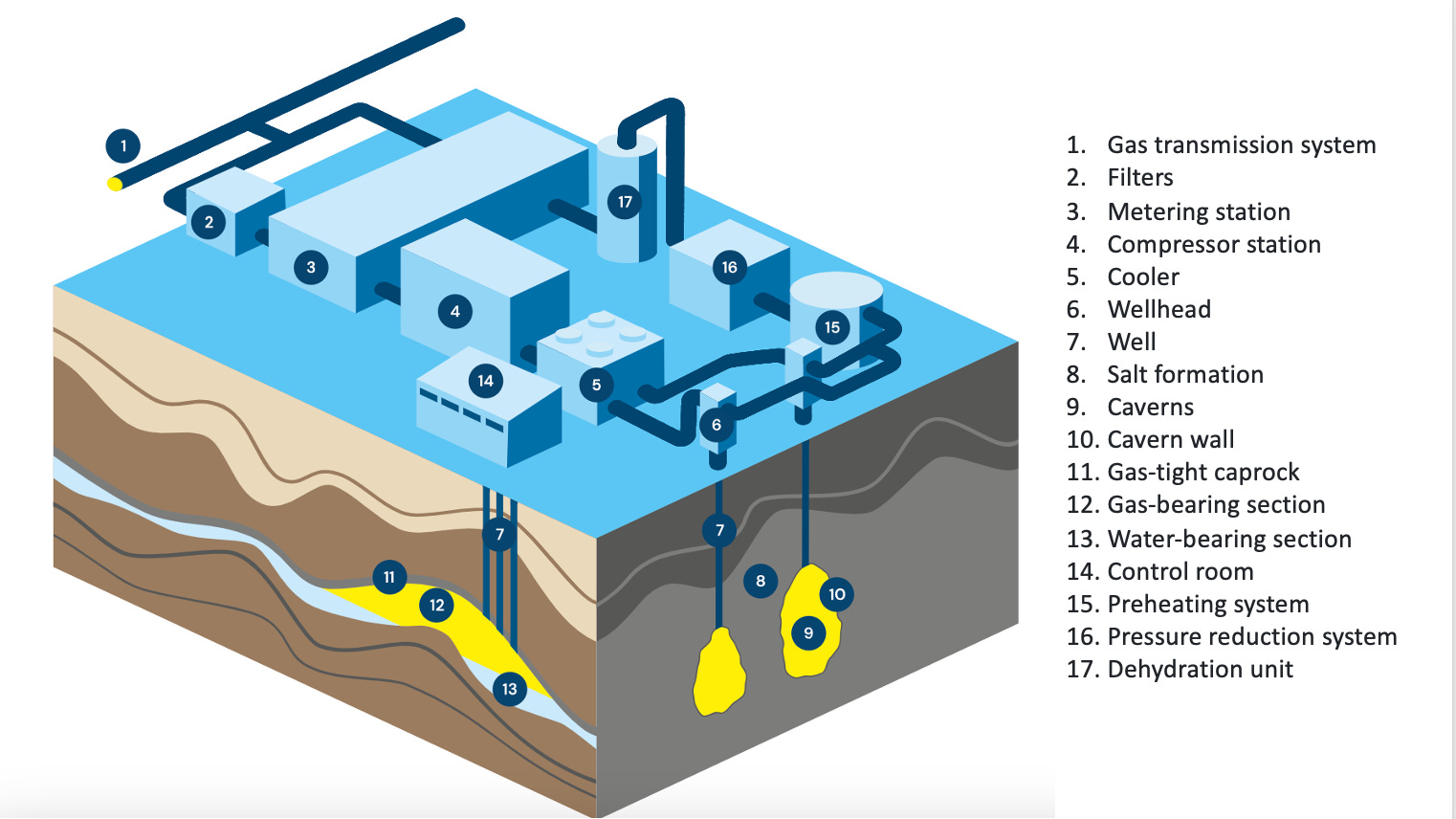
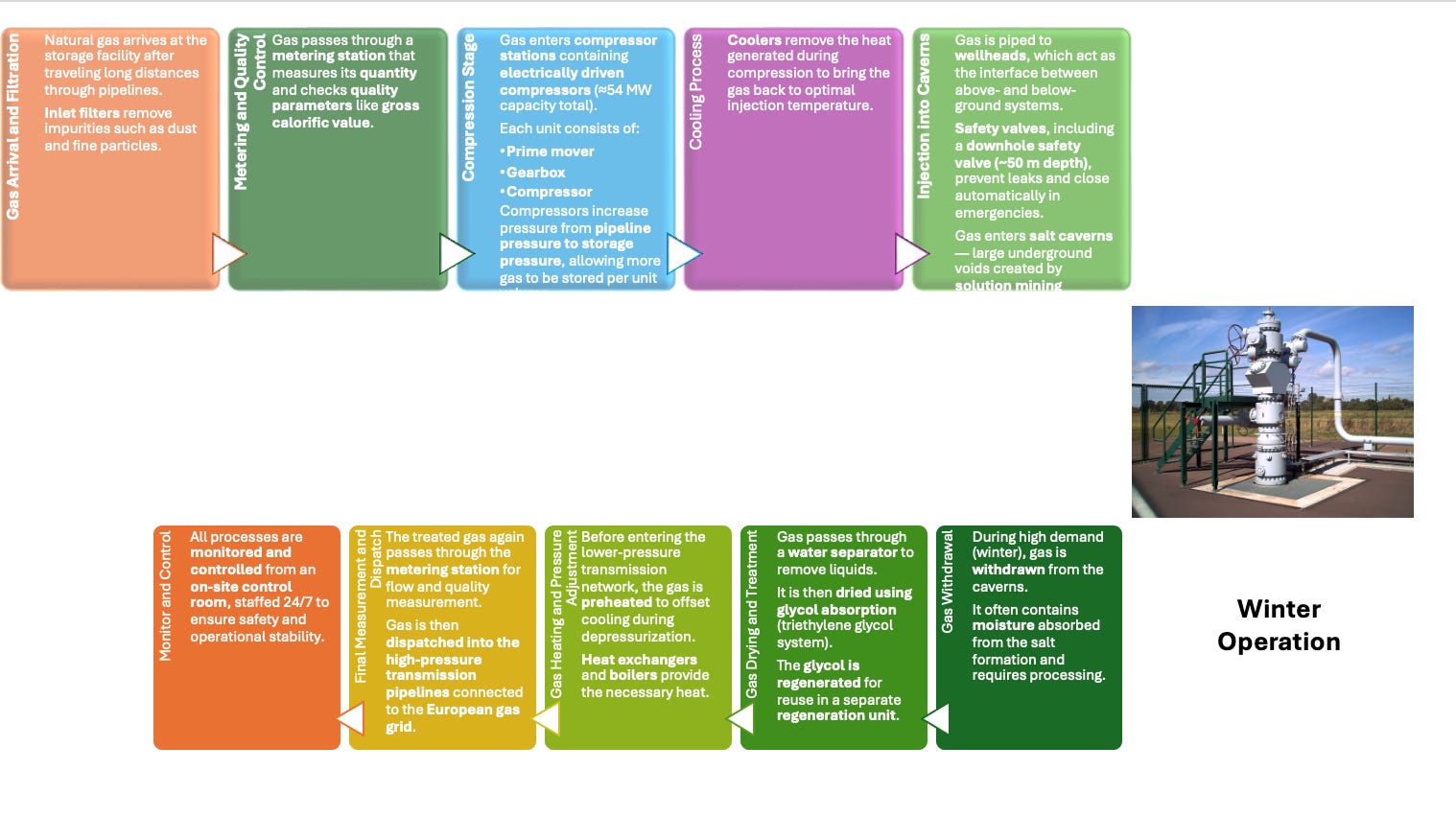
Variables and Measurements
The parameters and variables that can be followed in storage fields (Underground Storage Systems or USS) generally fall into categories related to capacity, volume, and operational rates.
Capacity and Volume Measures
- Total gas storage capacity: The maximum volume of natural gas that can be stored in an underground storage facility, determined by the reservoir’s physical characteristics, installed equipment, and operating procedures specific to the s
- Total gas in storage: The total volume of gas held in the underground facility at a particular time. This is often reported in TWh (Terawatt-hours).
- 1 TWh = 0,0893423 bcm
- Base gas (or Cushion gas): The volume of gas intended to remain as permanent inventory in the reservoir to ensure adequate pressure and deliverability rates throughout the withdrawal season. This is required in both Underground Natural Gas Storage (UGS) and Underground Hydrogen Storage (UHS) systems.
- Working gas capacity (or volume): The total gas storage capacity minus the base gas. It represents the amount of gas that can be injected, stored, and withdrawn during the normal commercial operation of a storage facility.
- Total Gas Storage Capacity – Base Gas
- Working gas: The volume of gas in the reservoir above the level of base gas, which is available to the marketplace at a particular time.
- Storage filling level: The amount of gas contained underground, measured as a percentage compared to the total capacity of the storage site.
- Physically unrecoverable gas: The amount of gas that becomes permanently embedded in the storage facility formation and can never be extracted.
Operational Rate Measures
- Deliverability (or Withdrawal rate/capacity): A measure of the amount of gas that can be delivered (withdrawn) from a storage facility daily.
- Usually expressed in MMcf/d (million cubic feet per day) or GWh/d (Gigawatt-hours per day).
- 1 GWh/d = 3 722,59 m3 / h
- Generally varies directly with the total amount of natural gas in the reservoir, peaking when the reservoir is most full.
- Usually expressed in MMcf/d (million cubic feet per day) or GWh/d (Gigawatt-hours per day).
- Injection capacity (or rate): The amount of gas that can be injected into a storage facility daily, viewed as the complement of the deliverability. Typically expressed in MMcf/d or GWh/d.
- Varies inversely with the total amount of gas in storage, being highest when the reservoir is nearly empty.
- Cycling rate: The average number of times a reservoir’s working gas volume can be turned over (injected and withdrawn) during a specified period, typically one year.
Physical and Operational Variables
- Pressure: Maintaining adequate pressure in the underground storage to enable sufficient injection and withdrawal rates. Compression is needed before gases like H2 or CO2 are injected to match the conditions of the geological formation, ensuring optimal storage. Injection pressure must necessarily be higher than the existing reservoir pressure.
- Temperature: A factor to be defined during the injection and withdrawal stages.
- Gas Content/Mixture refers to the percentage content of both working gas (such as NG or H2) and cushion gas (such as N2, CH4, or CO2). Studies investigate how the mixture of operating and cushion gases could affect the quality of recovered gas.
- Cushion gas volume must be defined carefully, along with the timing of its injection, to avoid gas overfilling or losses.
- Timing/Schedule: A detailed schedule, including appropriate timing for working gas injection, withdrawal, and shut-in timing, must be established.
- Gas Migration/Losses: Gas losses (e.g., H2 loss in UHS) are a significant issue. The absence of gas migration represents the tightness and proper operation of the underground storage site. For storage operation, H2 losses caused by diffusion should ideally not exceed 0.1% to 1%.
Underground gas storage remains a cornerstone of energy system reliability and operational flexibility, underpinning both economic stability and energy security. By mitigating seasonal demand fluctuations, stabilizing gas prices, and safeguarding against supply disruptions, UGS facilities deliver essential value to producers, consumers, and grid operators alike. Looking ahead, the evolution of storage technologies toward hydrogen and other green gases positions these facilities at the forefront of the energy transition. Their proven engineering foundations, combined with emerging low-carbon applications, will enable UGS to play a pivotal role in achieving long-term decarbonization objectives while maintaining the stability, efficiency, and sustainability of the integrated energy system.
Reference: